
Technical Debt Is a Business Decision, Not a Moral Failing
Teams treat technical debt like something to feel guilty about. It's more useful to treat it like debt: a tool you take on deliberately, track honestly, and pay down on a schedule.
By Ali Kolachi
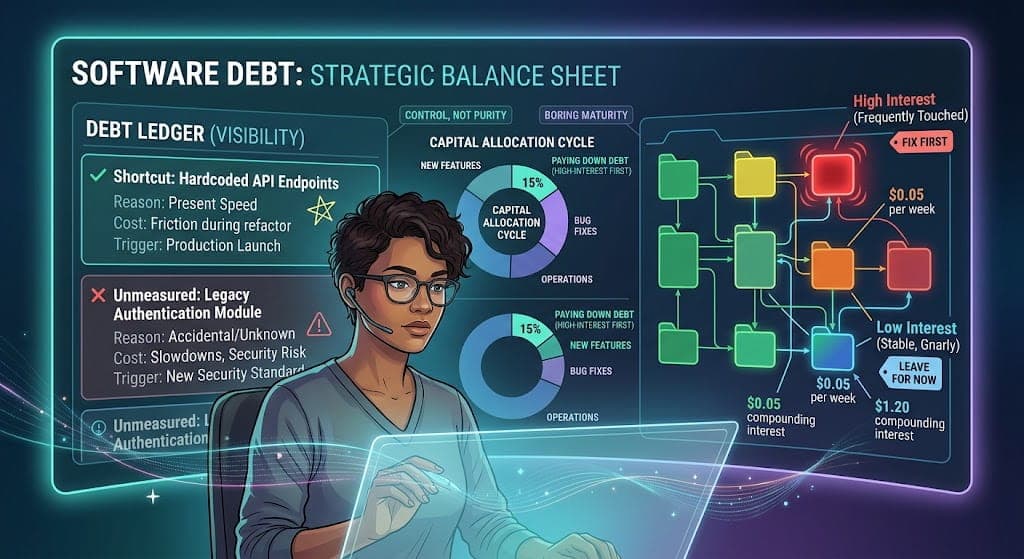
Somewhere along the way, "technical debt" became a term of shame — the thing you confess in a retro, the mess the last team left behind. That framing is worse than useless, because it makes debt invisible right up until it's a crisis.
The original metaphor is better. Debt is a financial instrument. Taken on deliberately, it lets you move faster than your cash allows. Ignored, it compounds until the interest eats you alive. Software debt works exactly the same way.
Some debt is the right call
Shipping a hardcoded value instead of a settings screen so you can validate the feature this week? That's a loan, and it might be a smart one. You're borrowing future work to buy present speed, and if the feature flops you never have to repay it.
The problem is never that debt exists. The problem is debt you took on without deciding to — the shortcut nobody flagged, the "temporary" workaround that quietly became load-bearing.
Deliberate debt is a strategy. Accidental debt is just a mess you haven't measured yet.
Write the loan down
The discipline that separates healthy teams from struggling ones is embarrassingly simple: when you take a shortcut, record it. A comment, a ticket, a line in a doc — anything that turns invisible debt into visible debt.
A good debt note captures three things:
- What you skipped and why the shortcut was reasonable at the time.
- What it costs you — the friction, risk, or slowdown you're now living with.
- What would trigger repayment — the scale, the feature, or the pain threshold that makes it worth fixing.
Now it's on the balance sheet. You can decide when to pay it, instead of being surprised by it.
Pay it down on purpose
You don't repay debt by declaring a heroic "refactoring sprint" once a year. You repay it the way you'd pay down a card: a steady percentage of every cycle, aimed at the debt with the highest interest.
The highest-interest debt isn't the ugliest code — it's the code you have to touch most often. A gnarly module nobody opens costs you nothing. A mildly awkward one that every feature routes through is bleeding you a little every week. Fix that one first.
The point is control, not purity
A debt-free codebase isn't the goal, any more than a debt-free balance sheet is the mark of a healthy company. The goal is knowing what you owe, choosing when you borrow, and never being ambushed by a bill you didn't know you'd signed for.
That's the boring version of engineering maturity: not code that's perfect, but debt that's honest — visible, priced, and paid down on a schedule you chose.
